jarixo.com
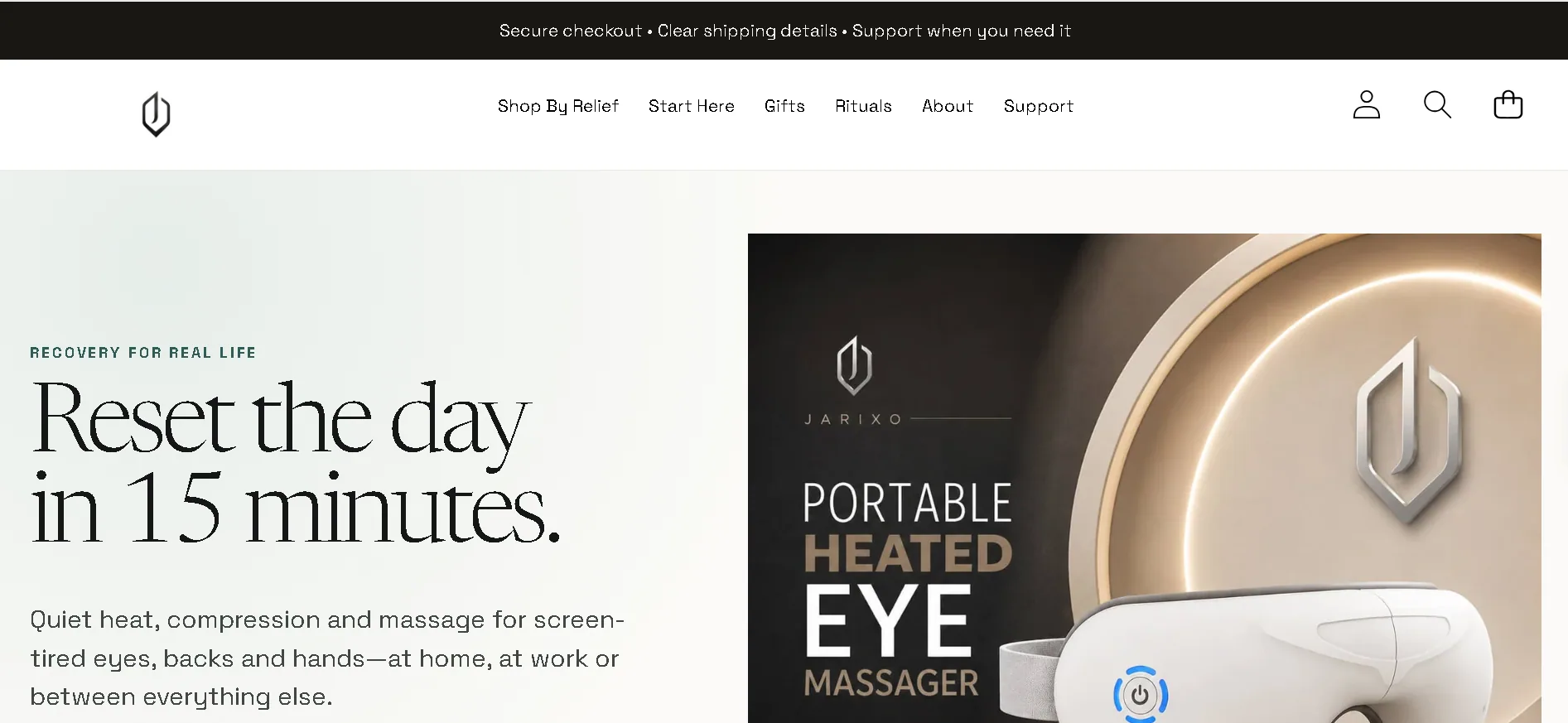
Shopify StoreWellness E-commerce platform
Jarixo
A premium wellness storefront built around calm visual storytelling, product discovery, and a smoother path to purchase.
Focused Service / Visual Development
/Clean Semantic Code / CMS Architecture
Framecipher builds Webflow websites for design-forward brands, agencies, and marketing teams who want more creative control than a template platform allows, without the overhead of a fully custom framework. Whether you're launching in Dhaka or building a brand presence across the US, UK, Australia, Canada, or UAE, our Webflow development services deliver a site that looks exactly as designed and stays manageable after launch.
Visual Development
Webflow Designer
Pixel-accurate layout
Content Engine
Dynamic CMS
Structured Collections
Interaction Frame
60fps Motion
Scroll & Micro-effects
Infrastructure
Fastly CDN
Global Edge Caching
Engineering Principles
Design-forward brands, agencies, and marketing teams that want creative control without the overhead of a fully custom framework.
Marketing websites, dynamic CMS sites, portfolios, and content platforms structured around your design, SEO, and publishing needs.
We plan CMS, components, responsive behavior, integrations, and publishing workflow before build—then launch a site your team can manage.
Not sure whether Webflow or a different platform fits your project? We'll tell you honestly which one makes sense.
Get an Honest AssessmentCase Studies & Real Work
Real Webflow implementations provide stronger evidence than a list of technologies. Our portfolio should show the business requirement, the Webflow architecture, and the work completed by our team.
A premium wellness storefront built around calm visual storytelling, product discovery, and a smoother path to purchase.

Bilingual personal platform for his profile, books, audiobooks, podcasts, research, and public thought leadership.
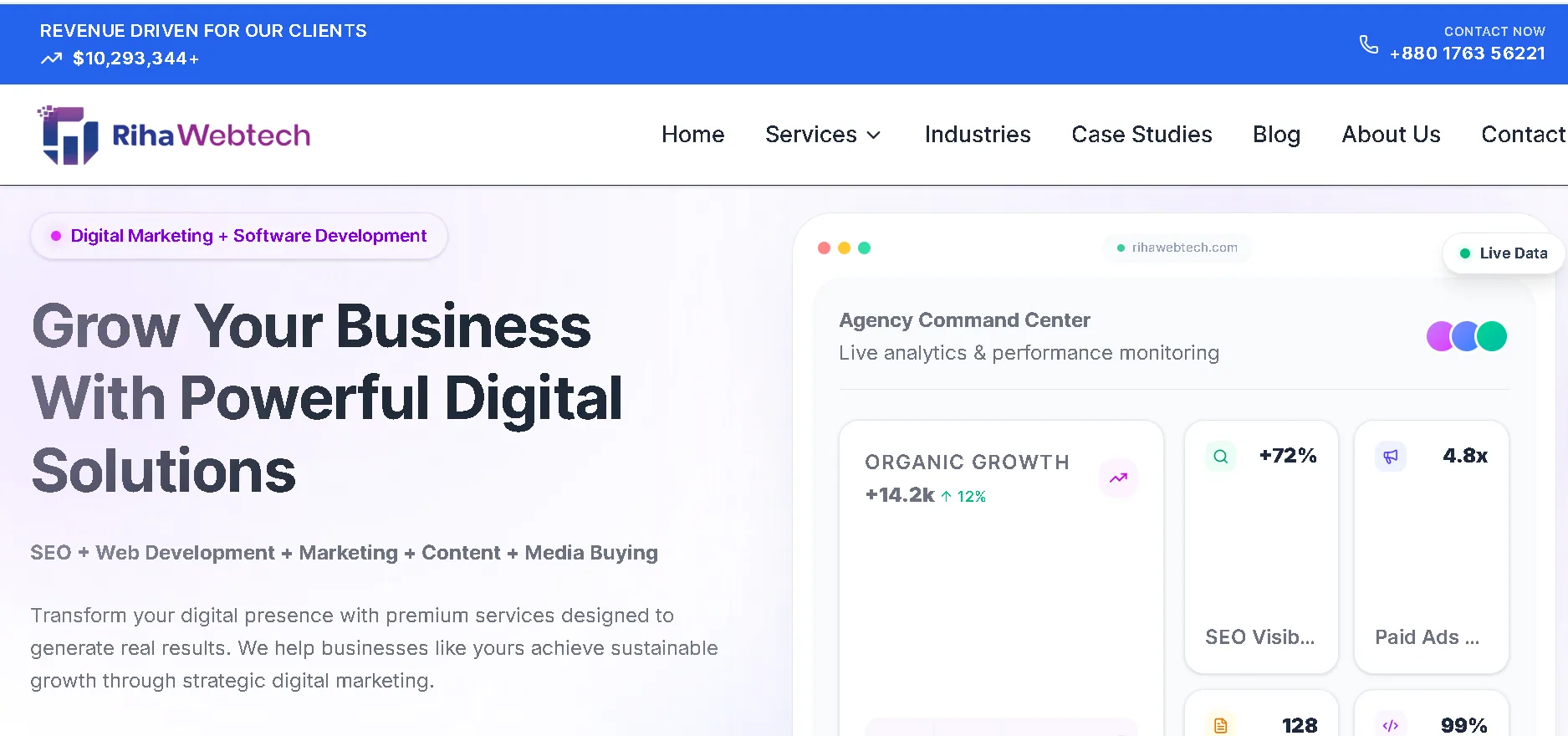
A modern digital agency website showcasing enterprise software development, digital solutions, and client capabilities with responsive architecture.
Portfolio Scope
Webflow websites built around brand identity, responsive design, interactions, and marketing goals.
Projects using structured Collections, reference relationships, dynamic templates, and reusable components.
Approved Figma designs translated into responsive Webflow experiences with CMS binding and reusable components.
Existing websites moved to Webflow while addressing content, redirects, metadata, structure, and SEO preservation.
Projects connecting Webflow with CRM, forms, analytics, booking tools, marketing platforms, APIs, or other business systems.
We only publish measurable results that can be supported by project data.
Core Capabilities
We provide end-to-end Webflow development for businesses that need design precision, structured content, and a manageable publishing workflow.
Every Webflow build starts with a content model that makes future updates easier rather than more fragile.
We structure the CMS and reusable components around how your team will actually create, manage, and reuse content after launch.
What We Do
We use Webflow's visual development environment to create interfaces that match the approved design while remaining practical to maintain.
Webflow interactions are powerful, but animation should support the user experience rather than become the reason a page feels slow or distracting.
What We Do
When the visual design already exists in Figma, we translate the approved design into a responsive Webflow implementation rather than rebuilding the design as a generic template.
Our Figma-to-Webflow workflow bridges pixel precision with robust responsive code:
What We Do
Webflow can handle many website requirements natively, while apps, integrations, APIs, and custom code can extend the platform when a project needs additional functionality.
Custom code is used only when it solves a genuine requirement to keep the project maintainable.
What We Do
Moving an existing website to Webflow requires more than rebuilding the visual design.
We plan migrations around the content, URLs, SEO signals, functionality, and publishing workflow that need to survive the move.
We can support migrations from WordPress, Wix, Squarespace, HubSpot and other CMS platforms, Custom websites, Legacy Webflow builds, and other supported website environments.
What We Do
Webflow can support websites serving different languages or regional audiences through localized content and publishing workflows.
We structure localization around the actual markets and languages a business needs rather than simply duplicating every page.
What We Do
For brands that need a design-focused storefront with a suitable product catalog, we can build ecommerce experiences within Webflow.
Depending on the project, our Webflow ecommerce setup includes:
What We Do
Making sure a visually rich site still loads efficiently and provides a strong technical foundation for search.
Design-heavy sites can become slow when animations, images, fonts, and third-party scripts are not managed carefully.
What We Do
A Webflow site's work does not end at launch. CMS content grows, design requirements change, and connected services occasionally need attention.
We keep your Webflow ecosystem pristine, secure, and technologically up-to-date:
What We Do
Architecture & Platform Components
Webflow development works best when the visual system, CMS, components, integrations, custom code, SEO, and publishing workflow are planned together. Depending on the project, our Webflow stack can include:
Responsive page development, reusable styles, components, layouts, interactions, and responsive breakpoints.
Structured Collections, dynamic templates, reference relationships, filtering, sorting, and CMS-driven page experiences.
Reusable design elements that help keep large websites consistent and easier to manage.
HTML, CSS, JavaScript, embeds, and custom functionality where native Webflow capabilities are not enough.
Site data integrations, CMS workflows, external systems, automation, and custom application connections.
Apps and extensions selected around genuine business requirements rather than unnecessary third-party functionality.
Localized pages, CMS content, components, URLs, and SEO configurations for multilingual or multi-region websites.
Semantic structure, image optimization, metadata, redirects, accessibility checks, mobile performance, and other technical considerations.
Operational Agility
Webflow is particularly useful for organizations that need strong visual control, structured content, and the ability for marketing teams to publish without depending on developers for every routine update.
Webflow gives teams strong control over layouts, responsive behavior, typography, interactions, and visual systems.
The CMS allows blogs, case studies, services, team members, resources, listings, and other structured content to be managed separately from page design.
Reusable components help teams maintain consistent layouts while allowing approved content and properties to change across instances.
A well-architected Webflow project lets marketing teams make routine content changes without editing source code.
SEO settings, structured content, redirects, responsive design, image optimization, and technical configuration can be considered throughout the Webflow build.
Localization can support different languages and regions through localized content, URLs, SEO settings, and CMS publishing workflows.
Webflow is powerful, but not every project needs extensive custom code or complex integrations. We use native capabilities first and add custom development only when the business requirement justifies it.
Platform Decision Framework
The right website platform depends on design requirements, content workflows, editing needs, integrations, ecommerce complexity, and long-term technical requirements.
| Factor | Webflow | WordPress | Wix |
|---|---|---|---|
| Visual Design Control | Strong | Strong with custom themes/builds | Strong |
| CMS & Structured Content | Strong | Very strong | Strong |
| Marketing-Team Editing | Strong | Strong with the right setup | Strong |
| Custom Code | Strong | Very high flexibility | Supported within platform constraints |
| Animations & Interactions | Strong | Depends on implementation | Strong |
| Integrations | APIs, apps, custom code | Large plugin ecosystem and APIs | Apps and integrations |
| Localization | Supported | Broad options through plugins/custom setup | Supported |
| Ecommerce | Suitable for selected use cases | Strong | Suitable for many business stores |
| Infrastructure | Managed platform | More technical management | Managed platform |
| Best Fit | Design-led marketing sites with structured content | Content-heavy or highly extensible websites | Businesses wanting easy website management and built-in tools |
Webflow is often a practical fit when design precision, structured content, marketing-team editing, responsive control, and a managed hosting environment are important.
WordPress can make more sense when the project requires a broad plugin ecosystem, complex publishing workflows, or functionality that fits naturally into the WordPress ecosystem.
Wix can be suitable when fast deployment, simple management, and built-in business functionality are more important than deeper design-system control.
We recommend the platform based on the actual requirements rather than forcing every project into Webflow.
Regional & International Delivery
Framecipher is based in Dhaka, Bangladesh, and builds Webflow websites for businesses across Bangladesh as well as international markets.
We can account for:
We can structure websites around:
The implementation depends on the markets, languages, and localization requirements included in the project.
The Framecipher Advantage
Webflow development is not only about making a site look good. CMS architecture, responsive behavior, interactions, SEO, integrations, performance, and the way your team manages content after launch all affect the quality of the final website.
Strategy, design, CMS architecture, development, integrations, SEO setup, and launch support stay within one coordinated team.
We plan the content model before building pages so your team can add and update content without breaking the design structure.
Visual design, responsive behavior, components, interactions, and CMS implementation are developed as one system rather than being handed between disconnected teams.
We recommend Webflow when design flexibility, structured content, and marketing-team editing are the right priorities. When the project requires a different architecture, we explain that before development starts.
We use custom JavaScript, embeds, APIs, and external integrations when they solve genuine requirements while avoiding unnecessary code that makes the site harder to maintain.
We consider page structure, metadata, redirects, images, mobile behavior, accessibility, and performance throughout the build.
For businesses serving multiple markets, we can plan localization, multilingual content, localized SEO, and regional publishing workflows around the project's requirements.
CMS architecture, design, interactions, development, and testing move through defined review checkpoints so you can approve the direction before launch.
Workflow & Delivery
We structure the process around getting the content model and design system right before the final build is locked in.
We review your brand, audience, existing website, content structure, integrations, goals, and how your team plans to manage the site after launch.
We define Collections, fields, relationships, reusable components, content requirements, and the publishing workflow.
We plan page hierarchy, responsive layouts, visual systems, interactions, and conversion paths before final development.
We build the approved design in Webflow, connect CMS content, implement components, configure interactions, and add agreed integrations or custom code.
We review metadata, links, redirects, responsive behavior, forms, interactions, page performance, accessibility, and other agreed technical requirements.
You review the project at defined checkpoints so major design, CMS, and functionality decisions are addressed before launch.
We complete final launch checks, publish the website, provide the agreed access and documentation, and train your team on routine CMS management.
Investment & Scope
Webflow development pricing depends on design complexity, CMS architecture, page count, interactions, integrations, and the amount of custom development required.
A straightforward marketing website can move faster than a build involving complex CMS relationships, extensive interactions, migration work, or custom integrations.
৳50,000
Typical Delivery: ~2–3 weeks
Page count, standard design, basic CMS
৳90,000
Typical Delivery: ~3–5 weeks
Custom animations, expanded CMS collections, component system
৳130,000
Typical Delivery: ~4–6 weeks
Product count, checkout customization, store-specific design
Custom Quote
Typical Delivery: ~6–8+ weeks
Complex content relationships, custom code, advanced interactions
Final pricing and timeline should be confirmed after reviewing the design, content structure, integrations, and technical requirements.
Knowledge Transfer & Independence
Your Webflow website should remain manageable after development is complete. We provide the agreed access, CMS guidance, and documentation needed for your team to manage routine content without relying on a developer for every update.
Depending on the project, we can train your team on:
We explain the reusable components, naming conventions, CMS relationships, and approved editing areas included in the project.
Where custom JavaScript, embeds, or integrations are included, documentation can explain what the code does, what it depends on, and how future developers should work with it.
At project close, we provide the agreed access and ownership arrangements defined in the project contract.
Launching the site is only one part of the project. Ongoing support can include:
We scope ongoing support separately based on the level of assistance the website requires.
Direct Answers
Common questions about our delivery process, technical standards, and engagement models.
Start Your Webflow Project
Planning a new Webflow website, Figma-to-Webflow build, CMS-driven site, migration, multilingual website, or custom integration? Tell us about your brand, content structure, design requirements, integrations, target audience, and timeline. We'll review the requirements and recommend the Webflow approach that fits your business.
A complete Webflow Development plan often connects with Shopify Development, Custom / Next.js Development, Website Redesign so strategy, execution, and measurement stay aligned.
Lateral Cluster Services
Framecipher builds Shopify stores for merchants who want reliable uptime and simplified backend management without taking on full custom infrastructure. Whether you're launching a store in Dhaka or selling to customers across the US, UK, Australia, Canada, or UAE, our Shopify development services deliver a store built to convert visitors and stay easy for your team to run.
Framecipher builds custom websites and web applications on Next.js for businesses with performance, integration, or scalability needs that pre-built platforms genuinely can't accommodate. Whether you're a growing company in Dhaka or a scaling business across the US, UK, Australia, Canada, or UAE, our custom development services deliver a platform built specifically around what your product actually needs, not what a template allows.
Framecipher redesigns websites for businesses, ecommerce stores, blogs, portfolios, and any other kind of site that's outdated, slow, or no longer performing, without losing the SEO rankings, content, or traffic already built up. Whether you're redesigning a business site, an online store, a content platform, or something else entirely in Dhaka or across the US, UK, Australia, Canada, or UAE, our redesign services fix what's actually broken instead of just applying a new coat of paint.
Documented Client Proof