ferdoushsaleheen.com

React / Next.jsPersonal brand website
Dr. Ferdoush Saleheen
Bilingual personal platform for his profile, books, audiobooks, podcasts, research, and public thought leadership.
Focused Service / Custom Next.js Engineering
/React & Next.js / Sub-Second Performance
Framecipher builds custom websites and web applications on Next.js/React.js for businesses with performance, integration, or scalability needs that pre-built platforms genuinely can't accommodate. Whether you're a growing company in Dhaka or a scaling business across the US, UK, Australia, Canada, or UAE, our custom development services deliver a platform built specifically around what your product actually needs, not what a template allows.
Core Engine
Next.js 15 & React
App Router & Actions
Architecture
Full-Stack TS
End-to-End Type Safety
Speed Standard
Sub-Second Load
Edge SSR Delivery
Ownership
Zero Lock-In
100% Full Source IP
Architectural Strategic Fit
Growing companies and products with performance, integration, or scalability needs that pre-built platforms genuinely can't accommodate.
Custom websites, web applications, SaaS products, headless ecommerce, dashboards, and portals on Next.js/React with full source ownership.
Every project starts with a platform-fit assessment, then frontend, backend, data, and performance are built around what your product needs.
Not sure whether you need custom development or a pre-built platform? We'll tell you honestly which one makes sense.
Get an Honest AssessmentCase Studies & Real Work
Our portfolio should show how custom development solved a real business requirement rather than simply displaying attractive interfaces.
Bilingual personal platform for his profile, books, audiobooks, podcasts, research, and public thought leadership.
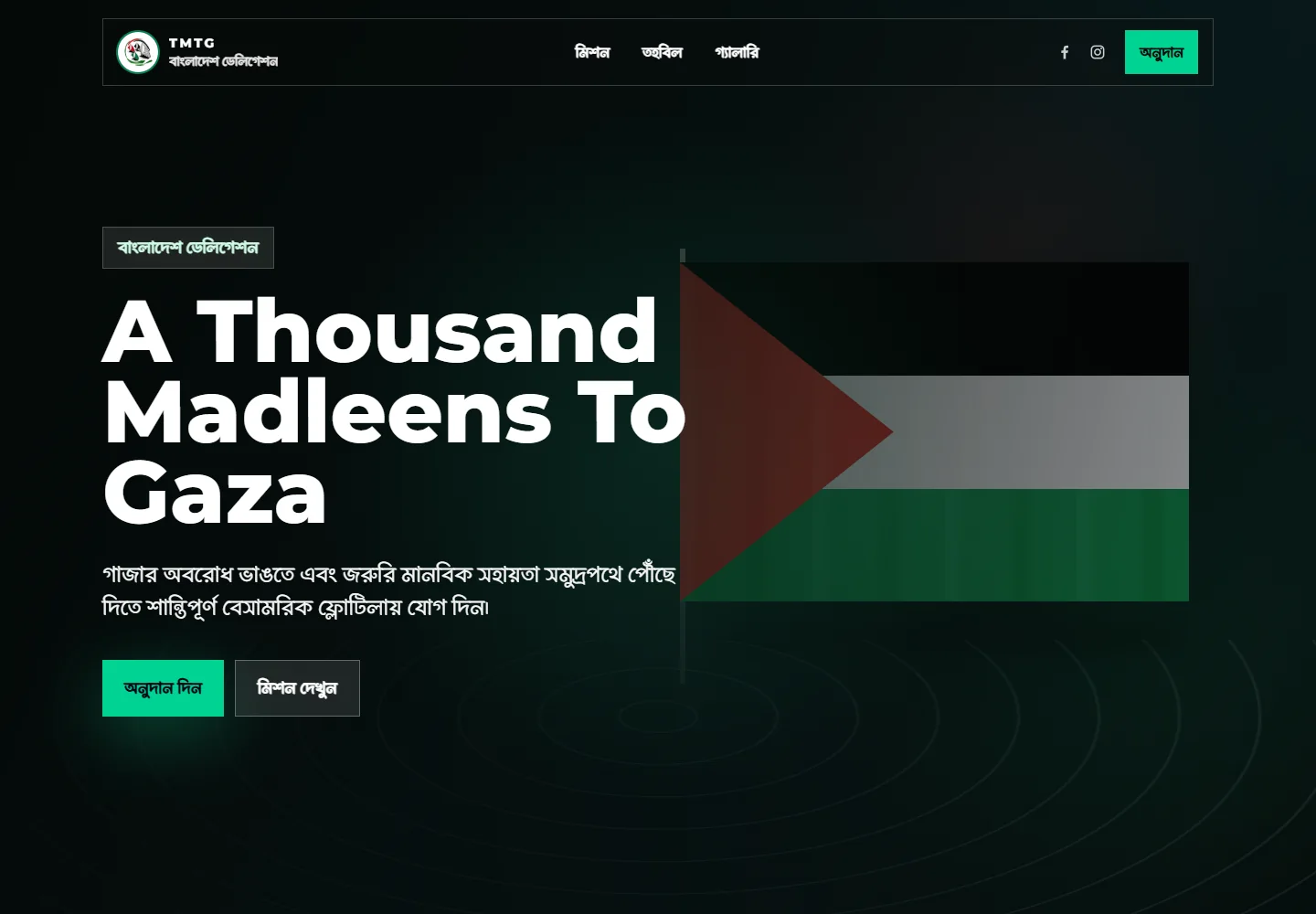
Public-facing advocacy and information site for a movement-focused initiative.
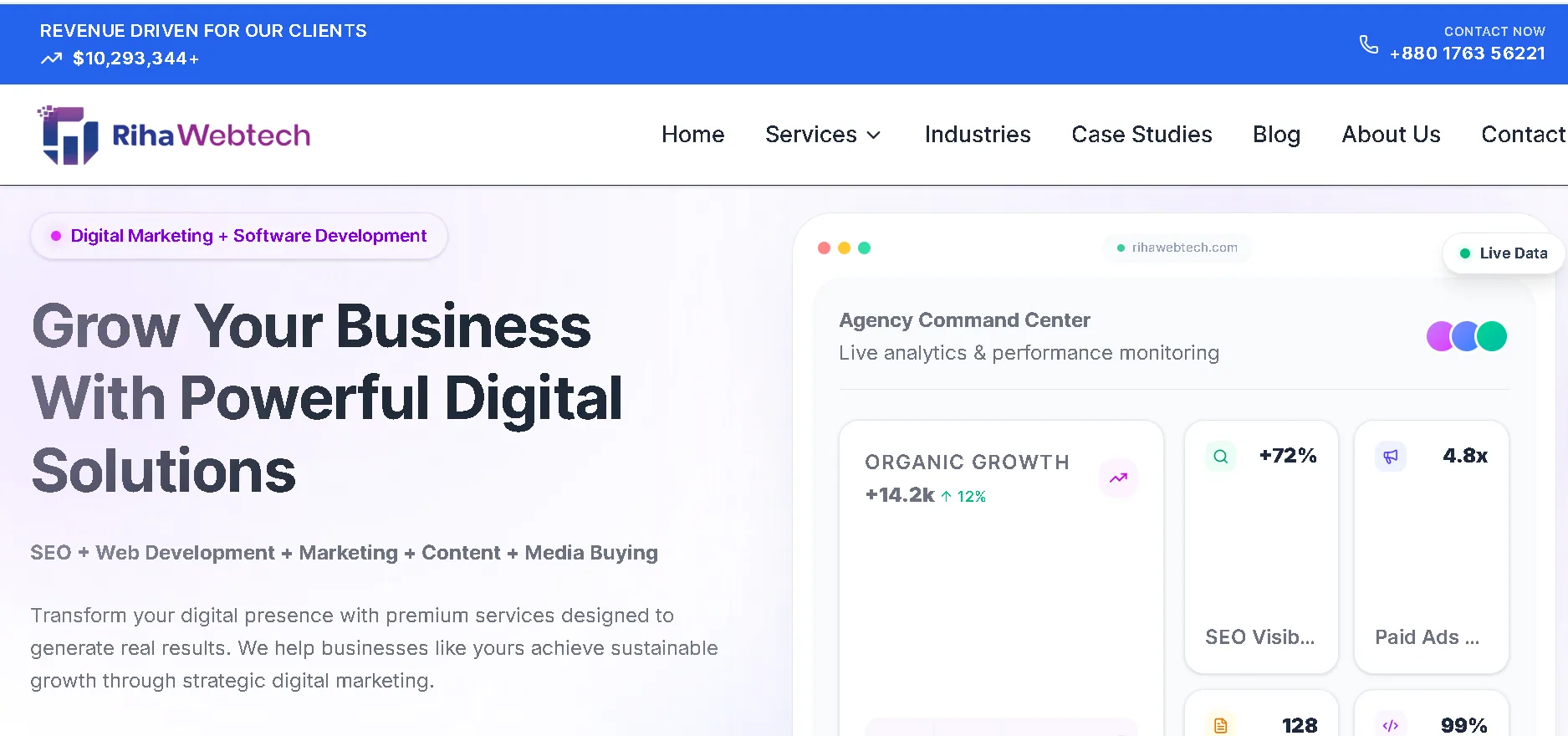
A modern digital agency website showcasing enterprise software development, digital solutions, and client capabilities with responsive architecture.
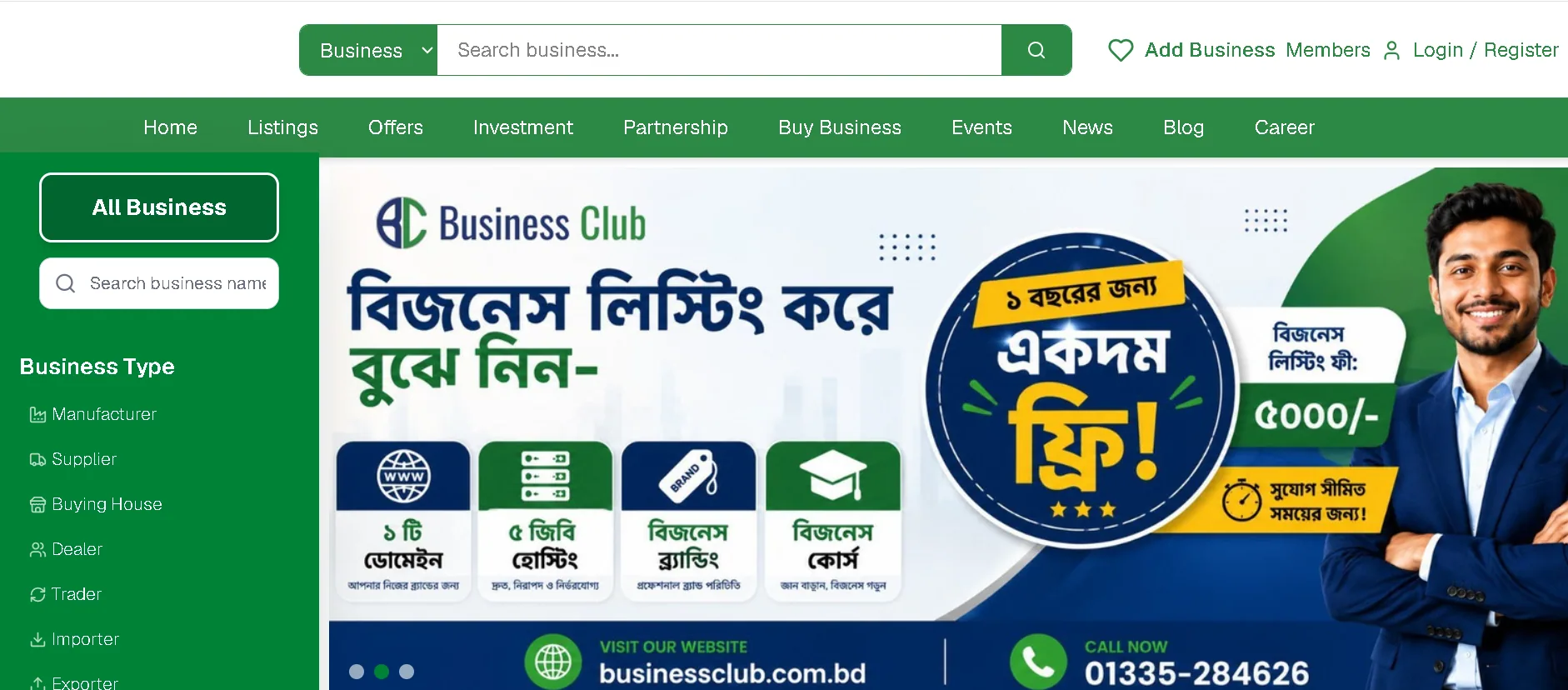
A business community platform built to present corporate initiatives, professional networking events, and member resources.
Portfolio Structure
The business, industry, problem, and project objective.
The Next.js architecture, frontend approach, backend requirements, integrations, and other relevant technologies.
Authentication, customer dashboards, admin systems, APIs, ecommerce, CMS, custom workflows, and third-party integrations.
Real application screens, dashboards, responsive interfaces, and important user flows.
Where project data is available, measurable results such as performance improvements, workflow improvements, conversion changes, or product usage.
We only publish outcomes that can be supported by actual project data.
Core Capabilities
We build custom Next.js websites and applications around your business requirements, technical needs, users, content, integrations, and long-term plans.
Every custom project starts with understanding what the system actually needs to do.
We review your business model, users, workflows, existing software, data, integrations, performance requirements, and future plans before defining the technical direction.
What We Do
Custom applications need interfaces built around tasks, not templates.
We design user experiences around real workflows, user roles, content, actions, and business requirements.
What We Do
For new projects, we use modern Next.js architecture where it fits the application requirements.
We choose the architecture based on how your application handles content, data, users, and interactions.
What We Do
We develop the frontend and application logic as a connected system.
This approach keeps the application's frontend, backend, data, and business logic aligned.
What We Do
Custom applications often need their own APIs and backend logic.
Where an external platform already provides the required API, we integrate with it instead of rebuilding functionality unnecessarily.
What We Do
Applications with multiple user types need clear access rules and secure account workflows.
Authentication and authorization are designed around the actual users and responsibilities within your application.
What We Do
Performance and security are considered during architecture rather than left until the end.
The right architecture depends on expected traffic, data volume, application complexity, and business requirements.
What We Do
Custom software needs structured testing before launch.
Testing is introduced throughout development instead of being treated only as a final launch task.
What We Do
Your product may continue to change after launch.
Ongoing development is scoped around your product roadmap and changing business requirements.
What We Do
Applied Architecture
Next.js can power much more than a standard marketing website. We use it when a project needs greater control over functionality, data, integrations, performance, or user experience.
Custom websites for companies that have outgrown conventional website builders or need more specialized functionality.
We build SaaS platforms around the workflows your customers and internal teams need.
We build authenticated interfaces for customers, employees, partners, and administrators.
When existing software does not match the way your team operates, a custom application can be designed around your actual workflow.
For businesses that connect multiple user groups, supporting complex multi-sided workflows.
A headless approach gives businesses more control over the storefront experience while keeping a commerce platform behind the scenes.
We recommend headless ecommerce when its additional development complexity is justified by the business requirements.
Powering content-heavy websites that need greater control over performance, design, and structured content.
When AI is part of the product itself, a custom Next.js application provides the interface around AI workflows, user accounts, dashboards, APIs, and business logic.
Platform Replatforming
Moving an existing website or application to Next.js requires more than rebuilding the frontend. We first review the current architecture, content, URLs, data, integrations, functionality, and technical limitations.
Rebuild the frontend in Next.js while preserving important content structures, URLs, metadata, redirects, and SEO requirements.
Modernize an existing React application where the business needs improved architecture, rendering options, routing, or performance.
Refactor an existing Next.js application toward the App Router while reviewing data fetching, component boundaries, routing, caching, and existing functionality.
Replace outdated frontend architecture with a more maintainable Next.js structure while protecting the business functionality that already works.
We can review and continue an existing Next.js project when a business needs a new development partner, technical improvements, or ongoing feature development.
A migration plan should protect valuable content and functionality while giving the new architecture a clear path forward.
Decoupled Content Architecture
A headless CMS can separate content management from the frontend experience. This can be useful when your content team needs an easy editing system while the website needs a highly customized Next.js frontend. Depending on the project, we can connect Next.js with a suitable headless CMS for:
The CMS is selected around the content model, editorial process, integrations, and long-term requirements rather than added simply because it is popular.
Technical Discovery / Organic Acquisition
SEO should be considered during architecture, especially when organic search is an important acquisition channel. Our Next.js SEO foundation can include:
Next.js provides built-in capabilities for metadata and different rendering approaches, which can be used as part of a broader technical SEO strategy.
Technical implementation alone does not guarantee rankings. Content quality, search intent, competition, authority, and ongoing optimization still matter.
Engineering Excellence
Performance should be considered during development rather than patched after launch. We focus on the parts of the application that can affect real user experience, including:
Next.js supports different rendering approaches for different use cases, such as static and dynamic rendering. The right choice depends on whether content is shared, personalized, frequently changing, or data-driven. We focus on measured improvements rather than promising an arbitrary performance score for every project.
Universal Usability
Accessibility starts during interface and frontend development. Depending on the project, we consider:
Accessibility requirements depend on the audience, project scope, and applicable standards. We address them as part of the design and development process rather than leaving them as a final check.
Production Reliability
A completed codebase still needs a reliable path to production. Depending on the project, deployment support can include:
The deployment approach is selected around the application's architecture, traffic, integrations, operational requirements, and future growth.
Architecture & Platform Stack
We choose the technology stack around the project rather than forcing every application into the same setup. The final stack is confirmed during technical discovery and architecture planning.
Next.js, React, TypeScript, and the frontend technologies selected for the project's requirements.
Reusable interface components, responsive systems, and the styling approach appropriate for the application.
Application logic, APIs, databases, authentication, and integrations based on the system architecture.
The database and content management approach selected around the application's data model and editorial workflow.
Payment services, CRM systems, ERP platforms, external APIs, and other business tools where required.
Hosting, deployment, monitoring, and infrastructure configured according to the application's operational requirements.
Feasibility & Assessment
Next.js is powerful, but custom development should not be the default solution for every website or application. We recommend Next.js when the project benefits from greater control over performance, application architecture, integrations, functionality, or long-term development.
Our role is not to sell custom development simply because it is technically advanced. We assess whether it creates enough business value to justify the investment.
Platform Decision Framework
The right technology depends on what your website or application needs to accomplish.
| Requirement | Next.js | WordPress | Webflow / Hosted Platforms |
|---|---|---|---|
| Custom application logic | Strong fit | Possible with development | More limited for complex logic |
| Content-driven websites | Strong | Strong | Strong for many use cases |
| Visual editing | Depends on CMS setup | Strong with the right setup | Strong |
| Complex integrations | Strong | Strong with development | Depends on available integrations |
| SaaS / dashboards | Strong fit | Possible with additional architecture | Usually less suitable |
| Headless architecture | Strong fit | Strong option | Depends on platform |
| Technical flexibility | High | High with development | Varies by platform |
| Platform maintenance | More development responsibility | More ongoing management | Lower for many hosted solutions |
| Best fit | Custom websites, applications, SaaS, portals, advanced systems | Content-driven and extensible CMS websites | Businesses prioritizing managed editing and faster implementation |
We recommend the platform based on your requirements, budget, internal team, content workflow, integrations, and long-term plans.
Regional & International Delivery
Framecipher is based in Dhaka and works with businesses in Bangladesh as well as clients serving international markets.
We consider:
We adapt:
The technical approach remains project-specific rather than using one fixed architecture for every client.
The Framecipher Advantage
Custom software needs closer collaboration than a standard website build. We structure our work around clear architecture, accountable development, and long-term maintainability.
We start with business requirements, users, workflows, data, and integrations before deciding how the system should be built.
Strategy, UX, architecture, design, development, and launch support stay coordinated within one team.
We recommend custom development when it solves a real limitation. When WordPress, Shopify, Webflow, Wix, or another platform is more practical, we say so.
Frontend, backend, APIs, authentication, integrations, and application logic are treated as one connected system.
We consider rendering, technical SEO, data delivery, mobile experience, and application performance from the beginning.
Important stages of architecture, design, and development go through defined review points before the project moves forward.
The objective is not simply to launch the application. We structure the system so new features and future improvements can be added without unnecessary technical debt.
Workflow & Delivery
Our process is designed to reduce uncertainty before expensive development decisions are made.
We understand your business model, users, workflows, existing systems, technical requirements, integrations, and project goals.
We determine whether Next.js and custom development are actually appropriate and define the major technical requirements.
We map user flows, system architecture, data structures, integrations, application components, and key technical dependencies.
We design the interface and reusable components around actual application workflows and user requirements.
We build the frontend, backend, database connections, APIs, authentication, integrations, and custom functionality.
We test functionality, responsiveness, security, performance, accessibility, and critical user workflows.
We prepare the production environment, deploy the application, complete final checks, and monitor the launch.
We provide the agreed access, documentation, and guidance, with ongoing development available for future improvements.
Investment & Scope
Custom development pricing depends heavily on architecture, functionality, integrations, user roles, data requirements, and infrastructure. Because every project is different, the figures below should be treated as starting references rather than fixed packages.
৳120,000
Typical Timeline: 4–6 weeks
Custom design, moderate functionality, no complex backend
৳300,000
Typical Timeline: 8–12 weeks
User accounts, custom database, moderate integrations
৳500,000+
Typical Timeline: 12–20 weeks
Multiple roles, extensive integrations, custom business logic
Custom Quote
Typical Timeline: 20+ weeks
High-volume infrastructure, multiple systems, ongoing development
Final pricing is confirmed after the scope and architecture are reviewed.
Delivery Roadmaps
Custom projects take longer than standard platform websites because the functionality and architecture are built around the specific requirements of the application.
| Project Type | Typical Timeline |
|---|---|
| Custom Marketing Site | 4–6 weeks |
| Standard Web Application | 8–12 weeks |
| Complex Web Application | 12–20 weeks |
| Enterprise / Large-Scale Platform | 20+ weeks |
Timeline depends on feature scope, content readiness, integrations, approvals, technical dependencies, and changes introduced during development. Projects generally move more efficiently when requirements, existing system access, content, and integration details are confirmed before development begins.
A custom application should remain understandable and manageable after development is complete. Depending on the project agreement, handover can include:
Ownership of source code, intellectual property, licenses, and third-party accounts is defined in the project agreement.
The goal is to give your team clear control over the agreed deliverables and the information needed to continue operating the application.
A custom application continues to evolve after launch as users, products, dependencies, and business requirements change. Ongoing support can include:
Ongoing development is scoped around your product roadmap and technical priorities.
Direct Answers
Common questions about our delivery process, technical standards, and engagement models.
Start Your Custom / Next.js Project
Have a custom website, SaaS product, dashboard, customer portal, ecommerce experience, or business application in mind? Tell us about your business, users, required functionality, existing systems, integrations, and development goals. We'll assess the requirements and recommend whether Next.js and custom development are the right approach for your project.
A complete Custom / Next.js Development plan often connects with Website Redesign, Website Maintenance, UI/UX Design so strategy, execution, and measurement stay aligned.
Lateral Cluster Services
Framecipher redesigns websites for businesses, ecommerce stores, blogs, portfolios, and any other kind of site that's outdated, slow, or no longer performing, without losing the SEO rankings, content, or traffic already built up. Whether you're redesigning a business site, an online store, a content platform, or something else entirely in Dhaka or across the US, UK, Australia, Canada, or UAE, our redesign services fix what's actually broken instead of just applying a new coat of paint.
Works Best Alongside
Documented Client Proof