
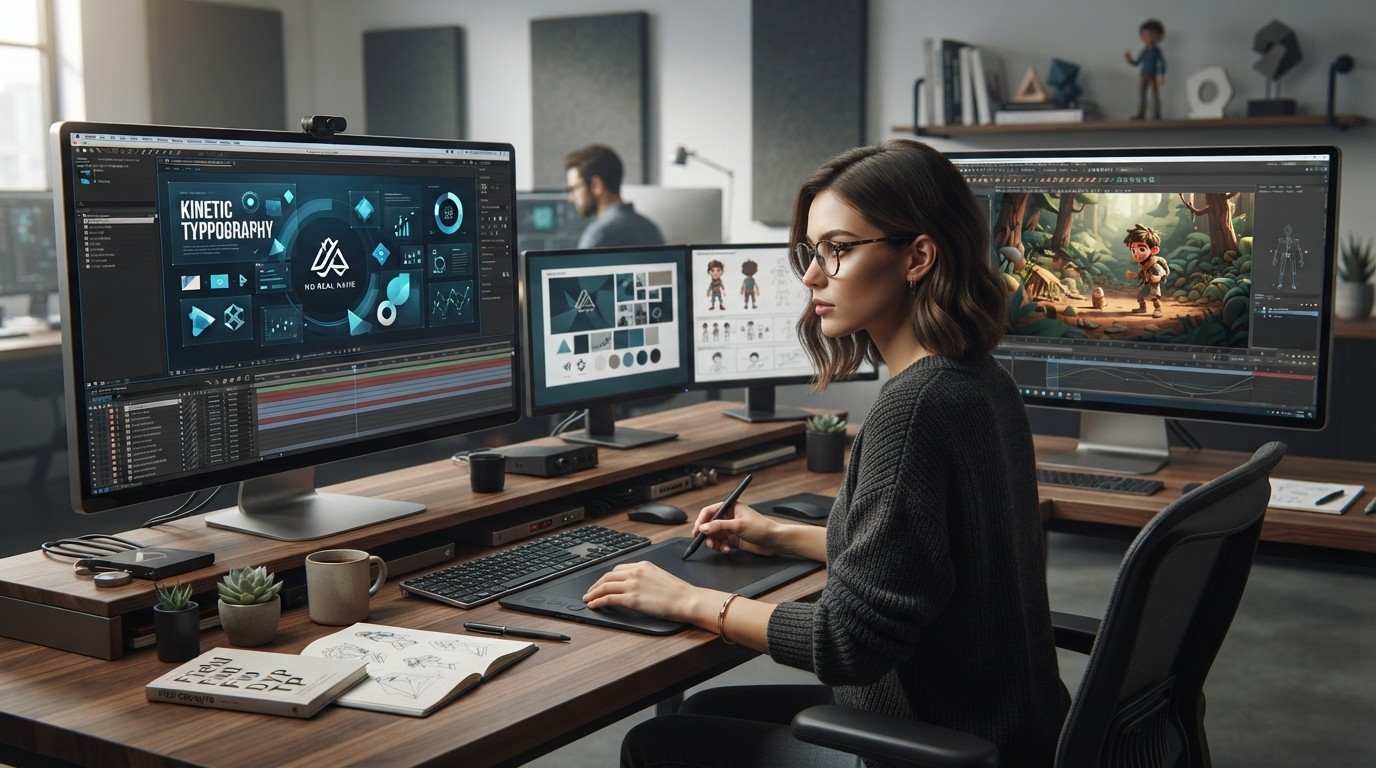
The difference between motion graphics vs animation comes down to what moves and why. Motion graphics moves graphic elements such as text, logos, icons, and charts to explain or promote something. Animation is the wider craft of creating the illusion of life and movement, and it includes character stories, scenes, and worlds.
That distinction matters in a brief. A business that asks for "an animation" when it needs a short explainer with animated text and product screens will receive proposals built on very different assumptions, timelines, and budgets.
Motion Graphics vs Animation: The Quick Answer
Motion graphics is a type of animation that focuses on moving graphic design elements, while animation as a whole covers any technique that creates movement frame by frame, including characters, objects, and environments. In business use, "motion graphics" usually means design-led explainers and brand content, and "animation" usually means story-led or character-led content.
Definition: Motion graphics is the practice of animating graphic elements typography, shapes, logos, icons, illustrations, and data to communicate information or reinforce a brand. It applies animation techniques to design assets rather than to characters, so the message, not a story or performance, carries the piece.
Aspect | Motion Graphics | Animation |
Definition | Animated graphic design: text, icons, logos, and shapes in motion | The broad craft of creating movement and life frame by frame |
Main purpose | Explain, inform, promote, and reinforce brand identity | Tell stories, express emotion, and entertain or teach through characters |
Core techniques | Kinetic typography, animated infographics, logo animation, shape and icon movement | Character animation, 2D and 3D animation, stop motion, frame-by-frame drawing |
Typical uses | Explainer videos, product demos, title sequences, social ads, presentations | Films, series, character explainers, educational stories, game content |
Cost drivers | Design complexity, number of scenes, voice-over, revision rounds | Character design and rigging, scene count, performance detail, rendering |
Production time | Often days to a few weeks for short pieces | Often weeks to months for character or story-led pieces |
Timelines in this table are typical planning ranges for short business projects, not fixed quotes. Scope decides the real schedule.
One mistake people often make is treating the two terms as exact synonyms in a brief. The words used set a studio's assumptions about design work, character work, and rendering time, so a loose brief produces quotes that cannot be compared fairly.
What Is Motion Graphics?
Motion graphics is animated graphic design. A designer takes static elements a logo, a headline, a chart, a set of icons and gives them movement, timing, and transitions so they explain an idea or hold attention. The starting point is design, and movement makes that design clearer or more memorable.
Common motion graphics formats include:
Explainer videos that walk through a product or service with animated text and screens
Animated logos and brand idents shown at the start or end of a video
Kinetic typography, where words move to match a voice-over or music
Animated infographics and charts that build a data point step by step
Title sequences, lower thirds, and transitions for video content
The relationship chain is direct: graphic design creates the elements, timing and easing give those elements movement, and that movement guides the viewer's eye to the message. Design → movement → attention → understanding is the sequence a motion graphics piece is built to produce.
In practice, motion graphics suits information that already exists in a clear form. A pricing model, a three-step process, or a feature list can become a moving sequence without inventing characters or a plot. The content supplies the structure, and motion supplies the emphasis.
A common issue is asking motion graphics to carry emotion it is not built to carry. Animated text and icons explain well, but they rarely make an audience care about a person. Projects that need empathy, humour, or a memorable character usually need character animation instead.
What Is Animation?
Animation is the broader craft of creating the illusion of movement and life from a sequence of images. Animators build characters, objects, and environments, then make them act over time. The category includes 2D hand-drawn animation, 3D animation, stop motion, and character-based explainer styles, plus motion graphics as one design-led branch.
Animation techniques differ in how movement is produced:
Frame-by-frame animation: each frame is drawn or adjusted individually, giving full control over movement
2D character animation: flat characters are built, rigged, and posed to act out a scene
3D animation: models are built in three dimensions, lit, and rendered, which suits products and realistic scenes
Stop motion: real objects are photographed, moved slightly, and photographed again
The dependency chain runs in a different direction. A story needs a character, a character needs design and rigging, rigging allows performance, and performance creates emotion. Story → character → rigging → performance → emotion is the sequence that makes animation effective for narrative content.
What matters most here is performance. Animation earns its cost when a character's expression, timing, or action communicates something words and diagrams cannot. A mascot reacting to a problem, or a character learning to use a product, can teach and persuade at once.
One mistake people often make is commissioning character animation for content with no story. If the script is a list of features, character animation adds weeks of design and rigging without adding meaning, and motion graphics would usually explain the same points faster.
How Motion Graphics and Animation Relate to Each Other
Motion graphics and animation relate as part and whole: motion graphics is one form of animation, focused on graphic elements, while animation includes many other forms built around characters, objects, and worlds. Every motion graphics piece is animated, but not every animated piece is motion graphics.
In many cases, a single project uses both. An explainer may open with a character scene that sets up a problem, switch to motion graphics for product screens and pricing, and close with an animated logo. Each part is chosen for the job it does well.
The practical difference is the brief, not the software. The same tools, such as Adobe After Effects for 2D motion work or Blender and Cinema 4D for 3D work, can produce a logo ident, a moving chart, or a character scene. Naming the technique tells the production team which skills to schedule: designers and motion artists for graphic-led work, or character designers, riggers, and animators for story-led work. Tool names here follow the software publishers' own product descriptions.
This typically happens when a quote looks unusually low: a studio has priced design-led motion work, while the client expected character animation. Naming the type, whether characters are included, and two or three reference videos in the brief prevents that mismatch.
Motion Graphics vs Animation: Which One Should You Choose?
Choose motion graphics when the goal is to explain information, present a product, or strengthen brand recognition. Choose character or story-led animation when the goal is to build emotion, teach through a character's experience, or entertain. The deciding factor is the content: information-led messages suit motion graphics, and story-led messages suit animation.
Use this decision framework before requesting a quote:
Your project | Better fit | Why |
Product demo or software walkthrough | Motion Graphics | Screens, labels, and callouts explain features directly |
Brand identity or animated logo | Motion Graphics | The brand element itself is the subject |
Data, pricing, or process explanation | Motion Graphics | Charts and steps can be built and revealed in sequence |
Social ad with a short offer message | Motion Graphics | Text and product visuals can be produced and resized quickly |
Story about a customer problem | Animation | A character can show the problem and the change it causes |
Children's or educational story content | Animation | Characters hold attention and model behaviour |
Mascot-led campaign | Animation | The mascot needs consistent performance across many pieces |
A better way to think about it is to ask one question: does the message need a character to work? If the answer is no, motion graphics is usually the faster, more direct route. If removing the character would remove the meaning, the project is an animation project and should be budgeted as one.
Teams often run into this when they choose based on style trends instead of content. A popular character style does not make a character useful in a software walkthrough, where viewers need to read screens and follow steps without distraction.
How Cost and Production Time Differ
Cost and production time differ because animation usually adds character design, rigging, and performance work that motion graphics does not need. Motion graphics is priced mainly on design complexity, scene count, and length. Animation adds those factors plus time to build characters and environments, animate them convincingly, and, for 3D work, render finished frames.
The main cost drivers, side by side:
Design work: motion graphics needs graphic layouts and style frames; animation needs character and environment design on top of layouts
Asset building: icons and charts are faster to build than rigged characters or 3D models
Movement work: moving shapes and text is faster than acting a character through a scene with expressions and timing
Sound: both formats may need voice-over, music licensing, and sound effects, so sound rarely explains a price gap
Revisions: changing a chart is usually quick; changing a character's design after animation has started can require re-rigging and re-animating scenes
This is why a one-minute motion graphics explainer and a one-minute character animation are rarely priced alike, even at the same length. The number of original assets that must be designed, built, and moved decides most of the labour, and character work multiplies that asset count.
A common issue is approving a character design late. Design approval leads to rigging, rigging leads to animation, and animation leads to rendering, so a late change at the first step repeats at every later step. Approving style frames and character designs in writing before production begins is the simplest cost control on an animation project.
Common Mistakes When Choosing Between Motion Graphics and Animation
The most common mistakes are using the two terms interchangeably in a brief, choosing character animation for information-only content, and judging cost by finished length alone. Each creates a mismatch between what a client expects and what a studio prices. A brief that names the format, deliverables, and reference examples prevents most of these problems.
Mistake | Why it hurts | Fix |
Briefing "an animation" without a type | Studios price different formats and scopes | Name motion graphics, 2D character, 3D, or stop motion, and attach references |
Adding characters to a feature list | Character design and rigging add weeks without adding clarity | Use motion graphics for feature and process content |
Comparing quotes by length only | One minute of charts and one minute of character acting need different labour | Compare asset counts, scene counts, and revision terms |
Approving designs late | Late changes repeat rigging, animation, and rendering work | Approve style frames and character designs before production |
Skipping voice-over and sound in the budget | Sound is often quoted separately and added late | List voice-over, music, and sound effects in the first brief |
One mistake people often make is treating the format choice as permanent for the whole brand. Many businesses use motion graphics for product and social content, and character animation for one flagship story piece, and the two styles support each other when the brand design system stays consistent.
Conclusion
Motion graphics vs animation is a question of scope. Motion graphics animates design elements to explain and promote. Animation in the wider sense creates movement and life, including characters and stories. The right choice depends on whether your message is carried by information or by a character's experience.
Three takeaways:
Motion graphics is a branch of animation focused on text, logos, icons, and data, built to explain information and support a brand.
Character and story-led animation costs more time because design, rigging, and performance work sits behind every scene.
Brief by content, not by label: if the message needs a character, budget for animation; if it needs clarity, choose motion graphics.
Your next step: write your message in one sentence, decide whether a character is required to deliver it, and note two reference videos showing the style you mean. If you want that judgement applied to a real project, Frame Cipher's motion graphics and animation team can review your brief and confirm which format fits your content and timeline.